

What if the very box designed to protect your Patek Philippe or Rolex is actually the silent architect of its decline? For many collectors, the focus remains on the exterior aesthetics, yet the internal environment is where the real preservation happens. You likely understand the frustration of discovering a micro-scratch on a polished lug or mysterious tarnishing on a vintage dial, often caused by the very fabrics meant to cradle them. Finding the best lining material for watch boxes is not merely a matter of choosing the softest texture; it is a technical decision involving chemical neutrality and material science.
We agree that your collection deserves an environment as refined as the movements themselves. This guide will help you discover which interior materials provide the ultimate protection against micro-scratches and oxidation for your luxury timepiece collection. We will examine the functional differences between velvet, suede, and microfibre, whilst identifying the non-reactive, acid-free standards required to preserve long-term value. From moisture management to adhesive safety, you will learn how to select a storage solution that offers genuine security rather than just a premium appearance.
Key Takeaways
- Understand the functional trade-offs between traditional velvet and modern microfibre to ensure your storage solution matches your specific timepiece requirements.
- Identify why pH neutrality and acid-free construction are the defining factors when selecting the best lining material for watch boxes to prevent long-term metal tarnishing.
- Learn how to tailor your choice based on your collection, opting for delicate velvet for vintage patinas or high-grip microfibre for heavy modern sports watches.
- Discover how premium technical linings act as a vital barrier against environmental hazards, providing both shock absorption and critical moisture control.
- Recognise the importance of combining high-end exterior craftsmanship, such as carbon fibre, with specialised technical interiors for a comprehensive preservation strategy.
Why the Interior Lining of a Watch Box is Critical
The history of decorative boxes reveals that lining has long been the primary safeguard for humanity's most precious objects. For a horological collection, the stakes are significantly higher. A luxury watch is a precision instrument, not just a piece of jewellery. The best lining material for watch boxes must serve as a technical buffer against mechanical shock whilst maintaining a chemically inert environment. If the interior fails, the watch's value begins to depreciate the moment the lid is closed.
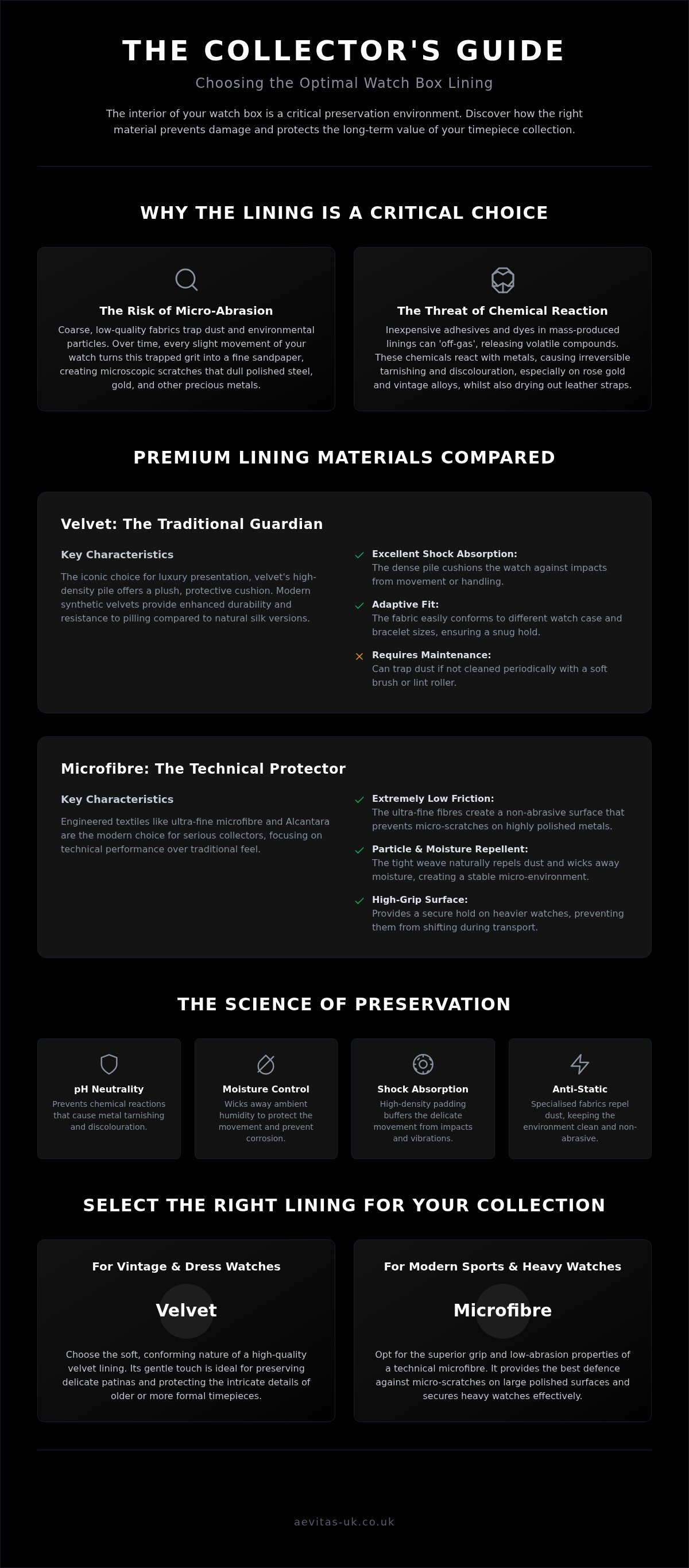
High-density linings provide essential shock absorption. When you place a box on a hard surface or move it between rooms, the internal padding prevents the movement from absorbing unnecessary impact. Surface protection is equally vital. A material that feels plush to the finger may still be abrasive at a microscopic level. True protection requires a non-abrasive finish that won't dull the mirror-polished surfaces of a luxury timepiece over years of storage. Long-term value preservation depends entirely on this hidden interface.
The Risk of Micro-Abrasion
Dust is the silent enemy of polished steel and gold. Coarse, loose-weave fabrics trap environmental particulates, essentially turning the lining into fine-grit sandpaper. Every time the watch shifts on its cushion, these trapped particles create micro-scratches. Whilst 904L stainless steel is resilient, precious metals like 18ct gold are softer and more prone to surface marring. Selecting the best lining material for watch boxes involves choosing tight-weave textiles that repel dust rather than harbouring it. This ensures the case remains in showroom condition without the need for frequent polishing.
Chemical Off-gassing and Metal Reaction
The most insidious threat to a collection isn't physical; it's chemical. Mass-produced storage often relies on inexpensive adhesives and non-neutral dyes. These materials release volatile organic compounds through a process known as off-gassing. Over time, these vapours react with the copper in rose gold or the silver in older alloys, causing permanent tarnishing and discolouration. Acidic environments can also dry out leather straps, leading to premature cracking and failure. Identifying a storage solution from the watch boxes collection that uses pH-neutral materials is essential for preserving both the dial's patina and the case's integrity.
Comparing Premium Lining Materials: Velvet, Suede, and Microfibre
Choosing the best lining material for watch boxes requires balancing tactile luxury with technical engineering. Whilst many collectors initially gravitate towards leather for its prestige, seasoned enthusiasts often avoid it. Certain tanned leathers contain residual acids and oils that can react with metal alloys. Instead, the industry has shifted towards specialised textiles that offer superior protection without the chemical risks associated with traditional hides.
Velvet remains the most iconic choice for luxury presentation. Its high-density pile provides excellent shock absorption, creating a soft cushion that prevents the watch from shifting. Velvet is particularly effective for varied collections because the fabric "pillows" conform easily to different bracelet sizes. Whether you're securing a delicate vintage dress watch or a modern oversized chronograph, velvet provides a snug, non-restrictive fit. For those seeking this classic protection, the luxury watch boxes from Aevitas Watch Winders utilize high-grade linings designed for long-term safety.
The Case for High-Grade Velvet
Natural silk velvet offers an unmatched sheen, but modern synthetic velvets are often more practical for daily storage. They are more resilient to pilling and easier to maintain. To keep a velvet interior in showroom condition, use a soft-bristled brush or a dedicated lint roller to remove environmental dust. This simple maintenance ensures that the fabric's tight weave continues to repel particulates rather than trapping them against your timepiece's polished lugs.
Microfibre and Technical Fabrics
Modern collectors are increasingly turning to ultra-fine microfibre and Alcantara. These materials are engineered for maximum particle removal and exceptionally low friction. One often-overlooked advantage of microfibre is its moisture-wicking capability. Unlike leather, which can trap humidity against a steel case back, technical microfibres allow for better air circulation. This prevents the formation of "spotting" or oxidation on the case, especially in humid climates. Using archival-quality materials in these technical fabrics ensures they remain chemically stable for decades.
Durability is another key factor. Heavy dive watches, often weighing over 200g, can put significant stress on interior fabrics. Microfibre and faux suedes like Alcantara stand up to this weight without thinning or tearing. Conversely, materials like silk and satin should be avoided for heavy sports watches. Whilst they look elegant, they lack the necessary grip. A heavy watch can easily slide on satin, leading to potential case-to-case contact if the box is tilted or moved. For a secure, technical environment, high-density microfibre is the professional's choice.
The Science of Protection: pH Neutrality and Moisture Control
Horological storage is an exercise in chemical management. Whilst most collectors focus on the physical softness of an interior, the chemical composition is the true guardian of a timepiece. pH neutrality refers to a material that sits at a value of 7.0 on the pH scale, indicating it is neither acidic nor alkaline. For a collector, this means the fabric won't leach corrosive elements onto the watch case or movement over decades of contact. Identifying the best lining material for watch boxes requires a look at this chemical baseline to ensure long-term preservation.
Vintage watches are particularly susceptible to environmental degradation. Older dials, often finished with delicate lacquers, can react poorly to acidic vapours. These vapours, often released by cheap interior adhesives, lead to dial blistering or the premature darkening of lume plots. Selecting the best lining material for watch boxes is therefore a critical step in preserving both the dial's patina and the case's integrity. Aevitas addresses this by selecting only high-density, acid-free linings that act as a neutral barrier against these invisible threats.
Preventing Oxidation on Precious Metals
Silver and low-karat gold alloys are highly reactive to sulphur. Many standard fabrics contain residual sulphur from the dyeing process, which causes rapid tarnishing. By using sulphur-free technical fabrics, you prevent the unsightly darkening of silver components and maintain the lustre of precious metals without chemical cleaners. These materials also protect the rubber or silicone gaskets within the watch, as acidic environments can cause these seals to become brittle and fail. In 2026, an acid-free lining is defined as a material processed without residual acidic chemicals, maintaining a stable pH level to prevent the corrosion of metallic components.
Humidity Regulation Within the Box
The internal climate of a storage box is as critical as its chemistry. Breathable fabrics like high-grade velvet and technical microfibre allow for natural air circulation. This is vital because trapped moisture is the primary cause of thickened movement lubricants and internal spotting. In airtight environments, such as those found in a watch winder safe, the lining must assist in maintaining a stable micro-environment. Non-breathable materials like certain plastics or low-quality faux leathers trap humidity, creating a greenhouse effect that damages mechanical movements. Aevitas ensures their interiors facilitate a balanced climate, preventing the lubrication from drying or thickening prematurely, which extends the service interval of your collection.
Selecting the Right Lining for Your Specific Collection
Collectors often make the mistake of choosing storage based on furniture matching rather than horological requirements. A diverse collection requires a nuanced approach to interior textiles. The best lining material for watch boxes for a vintage enthusiast is fundamentally different from what a modern sports watch collector requires. Matching the fabric's physical properties to the watch's weight and materials is the only way to ensure total preservation.
Vintage collections, often featuring delicate patinas and softer acrylic crystals, demand the high-pile protection of acid-free velvet. Velvet provides a deep, soft bed that minimises pressure on ageing gaskets and prevents the marring of acrylic glass. In contrast, modern sports watches, particularly those with heavy 44mm steel cases, require the technical grip of high-density microfibre. A heavy dive watch on a steel bracelet can easily slip on traditional silk or satin, leading to case-to-case impact. Microfibre provides the necessary surface friction to keep these heavyweights securely in place.
Matching Material to Watch Type
Watch dimensions play a significant role in lining selection. Oversized timepieces require deeper compartments and thicker cushioned linings to prevent the bezel from contacting the box lid. If you're storing a mix of vintage and modern pieces, consult our Luxury Watch Storage Box guide for specific 2026 recommendations. Sapphire glass is virtually scratch-proof, but acrylic crystals found on heritage models are incredibly prone to hairline marring from coarse fabrics. Ensuring the lining is non-abrasive at a microscopic level is non-negotiable for these delicate surfaces.
Cushion Design and Lining Synergy
The interaction between the cushion and the lining determines the ease of daily use. Modern "M-shaped" cushions, designed to compress and expand, work best with high-elasticity linings like technical suedes. This synergy ensures the watch remains snug without stretching the bracelet or strap. It's also vital to ensure the chosen material covers all internal dividers. Exposed wood or hard plastic between slots is a common failure point in budget boxes, leading to metal-on-metal contact when the box is moved. A fully lined interior is the only way to guarantee total isolation for each piece.
Explore the full range of professionally lined Aevitas USA watch boxes to find the perfect match for your specific collection.
The Aevitas Standard: Why Our Linings Excel
Aevitas has established itself as the premier authority in horological storage by prioritising the technical integrity of every interior. We understand that a collector's primary concern is the long-term preservation of their investment. Our commitment to using only pH-neutral, high-density luxury linings ensures that every timepiece remains in showroom condition. By selecting the best lining material for watch boxes, we provide a chemically inert environment that prevents the tarnishing and oxidation risks inherent in lower-quality storage solutions.
Our design philosophy integrates modern engineering with traditional craftsmanship. We specialise in high-gloss finishes and carbon fibre exteriors, but the true value lies beneath the surface. Each interior is rigorously tested for compatibility with the world's leading luxury watch brands, ensuring our fabrics won't react with specific metal alloys or delicate dial lacquers. The Aevitas promise is simple: we provide a presentation that never compromises on technical protection. This balance of luxury and utility is why we remain the best-selling premium watch storage brand.
Craftsmanship and Material Sourcing
The selection process for our premium jewellery and Watch Presentation Boxes involves sourcing textiles that meet strict archival standards. This dedication to quality isn't limited to our fixed storage solutions. Our luxury watch rolls utilise the same high-standard materials as our larger boxes, ensuring your timepieces receive consistent protection whilst you travel. Whether it's a carbon fibre winder or a leather travel case, the interior quality remains unwavering. We don't just choose fabrics for their feel; we choose them for their ability to maintain a stable micro-environment for your collection.
The Collector’s Choice for 2026
As we move through 2026, Aevitas remains the favourite amongst serious British collectors who value both aesthetics and functional excellence. Our reputation is built on providing a sense of calm and order to the discerning collector. Before you secure your next timepiece, use this final checklist to ensure your storage meets the professional standard:
- Is the lining verified as pH-neutral and acid-free?
- Does the fabric have a high-density weave to repel environmental dust?
- Are all internal dividers fully lined to prevent metal-on-metal contact?
- Does the cushion design provide adequate tension without stretching the bracelet?
Invest in storage that respects the heritage and financial value of your collection. Explore the Aevitas Watch Box Collection to discover the pinnacle of protective luxury and ensure your timepieces are preserved for the next generation.
Securing Your Horological Legacy
Preserving a luxury collection requires more than a secure lock; it demands a technically superior internal environment. You now understand that the best lining material for watch boxes is defined by its chemical neutrality and ability to manage moisture, rather than mere tactile softness. Whether you prioritise the heritage protection of acid-free velvet for vintage pieces or the high-grip security of microfibre for modern sports watches, your choice directly impacts your collection's longevity.
Aevitas remains the best-selling premium brand because we never compromise on these standards. Our storage solutions are compatible with all major luxury watch brands, providing the peace of mind that your investment is shielded from micro-abrasion and oxidation. We offer free insured delivery worldwide, ensuring your transition to refined storage is seamless and secure. Don't leave the safety of your timepieces to chance when professional-grade protection is available.
View our range of Luxury Watch Storage Boxes and give your collection the expert care it deserves.
Frequently Asked Questions
Is velvet or leather better for lining a watch box?
Velvet is generally superior for internal lining. Leather often contains residual tannins and acids from the curing process that can react with metal alloys over time. Velvet provides a chemically neutral, high-density cushion that prevents micro-abrasions. It is widely considered the best lining material for watch boxes because it doesn't dry out or crack, ensuring a stable environment for both bracelets and delicate leather straps.
Can the lining material cause my watch to tarnish?
Low-quality linings are a primary cause of tarnishing on precious metals. Cheap adhesives and synthetic dyes can release volatile organic compounds, a process known as off-gassing. These vapours react with the copper or silver in gold alloys, leading to rapid discolouration. Choosing a pH-neutral, technical lining from a specialist like Aevitas is essential to prevent this chemical degradation and protect your collection's long-term value.
What does "acid-free" mean for watch storage?
Acid-free refers to materials processed to remove acidic compounds, maintaining a neutral pH level of 7.0. In horology, this standard is vital for preventing the corrosion of metallic components and the blistering of delicate dial lacquers. Using acid-free fabrics ensures that the interior environment remains non-reactive. This is a core requirement for any serious collector looking to preserve heritage pieces or high-value modern timepieces over several decades.
How do I clean the interior lining of my watch box?
Maintenance should be performed with a soft-bristled brush or a dedicated lint roller. Avoid using liquid cleaners or harsh chemicals, as these can disturb the fabric's pile and introduce moisture into the box. For technical microfibres, a slightly damp, lint-free cloth can remove light marks, but the interior must be completely dry before returning your watches. Regular dusting prevents particulates from becoming trapped and acting as an abrasive.
Are microfibre linings safe for vintage watches?
High-quality microfibre is exceptionally safe for vintage watches, provided it is a tight-weave technical fabric. Its ultra-fine fibres are non-abrasive, making it ideal for protecting delicate acrylic crystals that are easily marred by coarser materials. Microfibre also offers excellent moisture-wicking properties, which helps prevent the internal spotting often found on heritage dials. It is a modern, reliable alternative to traditional velvet for collectors seeking maximum surface protection and climate stability.
Do I need a different lining for gold vs stainless steel watches?
Whilst both metals benefit from soft, non-abrasive interiors, gold requires stricter chemical neutrality. Gold alloys, particularly rose and white gold, contain copper or silver which reacts quickly to acidic environments. Stainless steel is more resilient but remains prone to micro-scratches from trapped dust. A high-density, pH-neutral velvet or microfibre is the best lining material for watch boxes containing mixed collections, as it addresses the chemical needs of gold and the cleanliness needed for steel.
Should the lining be breathable or airtight?
The internal environment should be breathable to allow for natural air circulation. Airtight storage can trap humidity, which leads to the thickening of movement lubricants and potential oxidation on the case back. Breathable fabrics like high-grade velvet or technical suedes assist in maintaining a stable micro-climate. This is especially important in humid environments or when storing watches in a safe, where stagnant air can accelerate the degradation of gaskets and oils.
How can I tell if a watch box uses high-quality lining?
Look for high-density fabrics that don't shed fibres when touched. A premium lining should feel consistent across all surfaces, including the dividers and the undersides of the cushions. Check if the brand specifies pH neutrality or acid-free standards. Aevitas ensures every interior meets these technical requirements. If the fabric feels thin or you can feel hard wood or plastic through the padding, it is likely a budget solution that lacks adequate protection.