

The best dual watch stand for couples doesn’t require the watches to match. A larger steel case beside a slimmer watch with a leather strap can make a personal display, provided both pieces look balanced and are easy to reach. Choose a shared stand to accommodate two individual collections, rather than simply to make space for two watches.
To bring your watches together, compare their size, style and everyday use, then consider where the stand will sit. A well-chosen display keeps daily access convenient and gives both timepieces a place in your home.
First, distinguish a display stand from a watch winder. A stand holds watches for display, while a winder rotates automatic watches to help keep them wound when they aren’t worn frequently. This guide covers what to look for in a shared display, including the contrast of white Italian marble, dark violet veining and black leather on a double stand, and when winding functionality may suit your routine better.
Key Takeaways
- Choose a dual watch stand for couples by considering both watches’ shapes, straps and visual presence, not just the number of spaces.
- Match the stand’s material, finish and colour to the room and the watches it will display.
- Decide together whether presentation, convenient daily access or keeping an automatic watch wound matters most.
- A stand provides a shared place to display watches; winding functionality serves a different purpose for automatic timepieces.
- Compare both watches, your habits and the intended setting before settling on a shared display.
Why a Dual Watch Stand for Couples Should Suit Two Individual Watches
Two watches, two tastes and one shared place to display them: a good stand brings the pair together without making either watch feel out of place. Start with the timepieces, then consider your daily habits and the setting. A dual watch stand for couples should present two individual choices as a deliberate pairing, not make them look like a matched set.
A dual watch stand is a display solution that holds two timepieces together for viewing and access. It’s more than a spare space on a surface. Each watch should remain visible, and the stand should suit the room where you plan to display the pair. For a broader look at presenting a timepiece, see this desk watch stand guide.
What makes a watch stand work for two people?
Begin with each owner’s preferred watch. Compare the case shapes, dial colours and straps, then consider the impression they make together. A bold, polished watch can sit beside a simpler design to create contrast. The display needn’t erase those differences. If both watches are worn often, a shared position that’s easy to reach can make choosing them part of a convenient daily routine.
A stand is for presentation and access, not a substitute for suitable storage when watches are off display. That distinction matters when you’re planning how to care for a collection: the stand can be part of the way you display your watches, while other storage choices serve different needs.
How watch history can shape a shared display
The Jaeger-LeCoultre Reverso shows how a watch’s original purpose can become part of its identity. Introduced in 1931, its defining feature is a case that swivels within its frame. The design was created to protect the watch’s face during polo, turning a practical response to sport into a recognisable form. A rounded watch beside a rectangular Reverso can make a shared display feel like a meeting of distinct design histories, rather than an attempt to match.
The Reverso’s story also shows why collectors may choose watches for more than appearance: a case shape can carry a connection to a particular use and era. Read more about the Reverso’s history and design, then consider what stories each owner’s chosen watch brings to the display.
Once you’ve considered the pair’s character, think about where the stand will sit and how easily both watches can be reached. A shared display feels most considered when it respects each timepiece’s individuality and has a clear place in everyday life.
Dual Watch Stand or Dual Watch Winder: Which Suits Your Watches?
A watch stand and a watch winder serve different purposes. The stand presents a watch; it doesn’t wind one. A winder rotates an automatic watch to help maintain its power reserve when it isn’t being worn. As watchmaking developed from manually wound mechanisms to self-winding designs, the ways owners cared for and displayed timepieces also evolved. This history of watchmaking offers context for why display and winding are separate functions.
| Dual watch stand | Dual watch winder |
|---|---|
| Purpose: Presents two watches together for viewing. | Purpose: Rotates automatic watches to help keep them wound. |
| Everyday role: Keeps selected watches visible and accessible. | Everyday role: Provides winding functionality between wears, where it suits the watches. |
| Best considered for: Display and convenient access. | Best considered for: Automatic watches whose requirements and wearing routine make winding useful. |
When is a dual watch stand the practical choice?
Choose a stand when your priority is to display two chosen watches together and keep them within easy reach. It can suit timepieces worn regularly, giving each a visible place in your daily routine. A stand doesn’t perform the work of a winder, and it isn’t a replacement for appropriate storage when watches aren’t on display. Its purpose is presentation and access.
This distinction matters because automatic watches use the wearer’s movement to wind their mainspring. The implications vary by watch, so consider display and winding as separate needs rather than assuming they go together.
When should couples consider a dual watch winder?
A winder may be worth considering if one or both watches are automatic and keeping them wound between wears is a priority. It isn’t automatically necessary for every automatic watch. Consider each timepiece’s requirements and how often it’s worn before choosing a winding solution.
Aevitas UK’s solid-oak dual watch winder is an alternative when winding two watches is the purpose. Couples looking to wind several timepieces can explore the multi-watch winder guide. For presentation and access, choose a static stand instead. Match the product to the watches’ needs and your routine, not appearance alone.
What to Compare in a Dual Watch Stand for Couples
A well-chosen dual watch stand for couples brings two individual timepieces into one considered display. Start by comparing each watch’s case shape, strap and visual presence. A broad, polished case may make a different impression from a slim watch with a restrained dial. The watches don’t need to match. Look for a stand that lets their differences feel balanced rather than competing for attention.
How should the stand complement two different watches?
Consider the stand’s material, finish and colour alongside the watches and the room. A quieter finish can keep the focus on contrasting dials and straps, while a distinctive base can become part of the display. Think about nearby furnishings and surfaces, too. The aim is a cohesive arrangement that reflects both owners’ tastes, not a stand chosen to suit only one watch.
Aevitas UK’s double watch stand in white marble with dark violet veins and black leather is one example of contrasting materials and colour. The white marble base has dark violet veins and black leather. Its distinctive surface gives the watches a defined backdrop. Browse the luxury watch stands collection to compare presentation styles.
Which practical details matter in daily use?
Picture the stand in the place where you intend to use it. Consider the available surface area, what will sit around it and how each person will reach for their watch. A clear arrangement can make the display easier to use and appreciate. Think through the routine: can each owner place a watch down and lift it without shifting the other timepiece?
Stability is another practical consideration. Choose a stand that feels secure on its intended surface, and don’t assume every two-watch design will suit every pair. Case shapes and straps differ. Before purchasing, review the product information for dimensions and compatibility guidance, then compare those details with both watches. This helps you assess the fit based on your actual timepieces, not appearance alone.
Finally, judge the stand as part of its setting. A material or colour that looks striking on its own may feel different beside your furnishings and watches. Consider the pair, the surface and the room together to choose a display that feels deliberate and works for both owners.
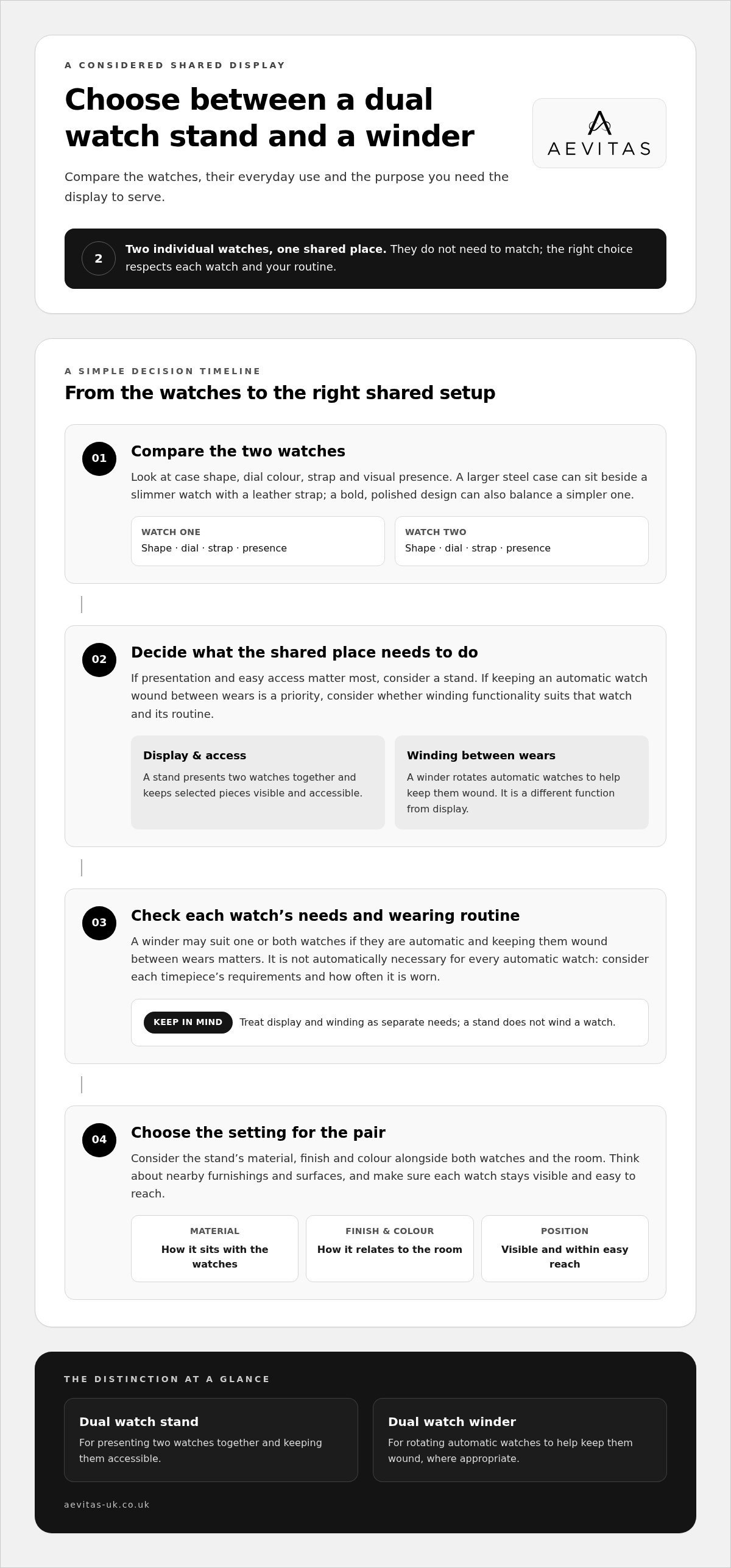
How to Choose a Shared Watch Stand: A Simple Couple’s Checklist
Start with the watches, not the stand. Use this checklist to agree what the display needs to do, how it should work in daily life and what will look right in your shared space.
- Describe both watches. Note each watch’s general style, case shape, dial colour and strap. This gives you a clear picture of the pair and of where their differences might complement one another.
- Compare wearing habits. Consider how often each owner wears their watch and where they usually put it down. A watch worn most days may benefit from being easy to reach, while a less frequently worn piece may need a different care routine.
- Decide whether display is enough. A stand presents watches; it doesn’t wind them. If winding an automatic watch is a priority, consider its individual requirements and wearing routine before choosing a winding device. Don’t assume every automatic watch needs one.
- Choose the shared location. Decide whether the stand will sit on a desk, dressing table or another surface. Consider the available space, what sits nearby and whether both owners can comfortably reach their watch.
- Agree on material and finish. Compare options such as wood, leather or marble, and consider how their colour and finish will look in the room. A subtle base can keep attention on the watches; a distinctive one can make the display a focal point.
- Settle on your display preference. Talk through what matters most: presentation, convenient daily access or automatic winding. Agreeing on that priority helps you choose between a shared stand and a winder without treating them as interchangeable.
A shared stand works best when its intended use, the pairing of watches and the display setting all point to the same choice. That’s the principle behind selecting a dual watch stand for couples: it should suit both owners, not just provide space for two watches.
Once you’ve agreed on the practical priorities and preferred look, browse Aevitas UK’s luxury watch stands for a considered shared display.
Explore Aevitas UK’s Dual Watch Stand for a Considered Shared Display
A shared display makes sense when your priority is to present two watches together and keep them accessible. Choose a stand that reflects the watches you own, the way you use them and the look you both want at home. It can bring a pair into your everyday routine, whether the watches share a style or express two distinct tastes.
A double stand for a shared watch display
The Aevitas Watch Storage Double Watch Stand in White Marble Dark Violet Veins with Black Leather brings together the materials and colours stated in its name: white marble with dark violet veins and black leather. The contrast gives the shared display a defined visual presence alongside the watches.
Consider how that combination will sit with both timepieces and the room. If the watches differ in dial colour, case shape or strap, assess the overall arrangement rather than judging the stand against only one watch. A shared display feels more personal when both owners see their watch represented in the pairing.
Make the final choice with both owners in mind
Let function guide the final decision as much as appearance. A watch stand presents watches; it doesn’t wind them. A dual watch winder is designed to rotate automatic watches, so it may suit you if winding is a priority for one or both owners. Consider each watch’s requirements and wearing routine rather than choosing a winder simply because it looks like a more elaborate display.
For watches you wear regularly, a stand can keep your chosen pair visible and easy to reach. Before settling on one, agree where it will sit, how both watches look together and whether presentation or winding matters more. The most suitable dual watch stand for couples is the one that serves your shared purpose without overlooking either owner’s preferences.
If display and access are the priority, explore Aevitas Watch Storage luxury watch stands for a considered way to bring two timepieces together.
Choose a Shared Display That Suits You Both
The right shared display brings two different watches together without asking either owner to compromise on personal style. Compare their shapes, colours and straps, then consider where the stand will sit and how easily you’ll reach each watch. Most importantly, decide whether you want presentation and access or winding functionality for an automatic watch that suits it.
Aevitas UK offers watch stands and multi-watch winding products, so you can choose according to your purpose. For a considered display, the double stand pairs a white marble base with dark violet veins and black leather. It shows how a shared stand can become part of the room as well as a place for two timepieces.
Choose the option that fits your watches, habits and shared sense of style. To explore a display-led approach, browse Aevitas UK’s luxury watch stands and find a considered starting point for your dual watch stand for couples.
Frequently Asked Questions
What is a dual watch stand for couples?
A dual watch stand for couples is a shared display designed to present two watches together and keep them accessible. It can suit partners with matching timepieces or different tastes, provided the watches work visually as a pair and the stand suits its setting. A stand is for display, not winding or long-term enclosed storage, so consider how you’ll care for watches when they’re not on show.
Can a dual watch stand wind automatic watches?
No. A watch stand holds watches for display but has no winding function. A watch winder rotates automatic watches to help keep them wound when they aren’t being worn. Whether that’s useful depends on each watch’s requirements and its owner’s routine, so don’t assume every automatic watch needs a winder. If winding is the priority, compare a dual winder with a static stand before choosing.
How do we choose a watch stand for two different watches?
Compare both watches’ case shapes, dial colours, straps and visual presence, then consider where the stand will sit. The watches don’t need to match; contrast can make a shared display feel balanced. Decide whether the finish should blend into the room or become a focal point. Also consider daily access and review the stand’s product details for dimensions and compatibility before purchasing.
Is a dual watch stand a good gift for a couple who collect watches?
It can be a thoughtful gift if both people enjoy displaying and reaching for their watches. A shared stand recognises their interest while giving two timepieces a place together. To make the choice personal, consider the couple’s tastes, the watches they wear most often and the room where the stand might sit. If winding is their main need, a dual watch winder may be more suitable.
What should we look for in a double watch stand?
Look for a finish that suits both watches and the setting, alongside an arrangement that lets each watch be placed, viewed and lifted conveniently. Consider whether the stand balances the pair rather than favouring one timepiece. Check the product information for dimensions and compatibility guidance, as watch shapes and straps vary. Choose a stand for display, not for winding or enclosed storage.
Can a watch stand hold watches with different strap styles?
Different strap styles don’t automatically rule out a shared stand, but suitability depends on the stand’s design and the individual watches. Compare how each watch rests on the display and whether both can be placed and lifted comfortably. Don’t assume every stand accommodates every strap or case shape. Use the product details to assess dimensions and compatibility before choosing a stand for the pair.
Should we choose a dual watch stand or a dual watch winder?
Choose a dual watch stand if presentation and convenient access are your priorities. Choose a dual watch winder if you want winding functionality for automatic watches and it suits their individual requirements and wearing routines. The products serve different purposes: a stand displays, while a winder rotates watches. Aevitas UK offers watch stands and multi-watch winding products, so base your choice on function as well as appearance.