

A luxury watch winder should be felt in the precision of your timepiece, not heard from across the room. If a persistent grinding sound or an unexpected rattle has ever interrupted your sleep, you've likely questioned the integrity of your equipment. It's a common anxiety for collectors who fear that a struggling motor might eventually damage a prized Rolex or Patek Philippe. When considering watch winder motor noise what to expect, the reality is that high-end engineering shouldn't demand your attention with audible strain.
We agree that a refined home requires equipment that operates with quiet confidence. This article promises to help you distinguish between the healthy, rhythmic whisper of a quality motor and the worrying sounds of mechanical failure. We'll explore why premium Japanese Mabuchi motors are the industry standard for near-silent performance and provide practical fixes for common vibration issues to ensure your bedroom remains a peaceful sanctuary. By understanding these acoustic benchmarks, you can protect the longevity of your collection whilst maintaining an atmosphere of total calm.
Key Takeaways
- Establish a baseline for luxury performance by understanding the whisper-quiet standard expected from high-end mechanical winders.
- Learn how Japanese Mabuchi motors and shielded gearboxes combine to provide nearly silent operation and superior durability.
- Gain clarity on watch winder motor noise what to expect by learning to distinguish between normal mechanical whispers and alarming internal faults.
- Discover how to eliminate the drum effect and unwanted vibrations through proper placement on solid surface materials.
- Explore how carbon fibre construction provides the rigidity and sound-dampening qualities necessary for a truly silent collection display.
Understanding Normal Watch Winder Operating Sounds
Luxury watch winders are precision instruments designed to complement the sophisticated engineering of an automatic timepiece. Whilst no mechanical device is entirely silent, the standard for premium equipment is "whisper-quiet" performance. Every device with moving parts generates some level of acoustic energy. In a high-end winder, this energy is contained within a well-insulated chassis, resulting in a faint, rhythmic pulse rather than a disruptive noise. When considering watch winder motor noise what to expect, the key is consistency. A healthy motor produces a steady, predictable sound that fades into the background of a quiet room.
Irregularity is the primary indicator of a problem. A healthy unit demonstrates a smooth rotation without the high-pitched friction or erratic grinding associated with lower-quality alternatives. By establishing a baseline of what is normal, you can better protect your collection from the vibrations caused by mechanical wear.
The Decibel Scale of Horological Maintenance
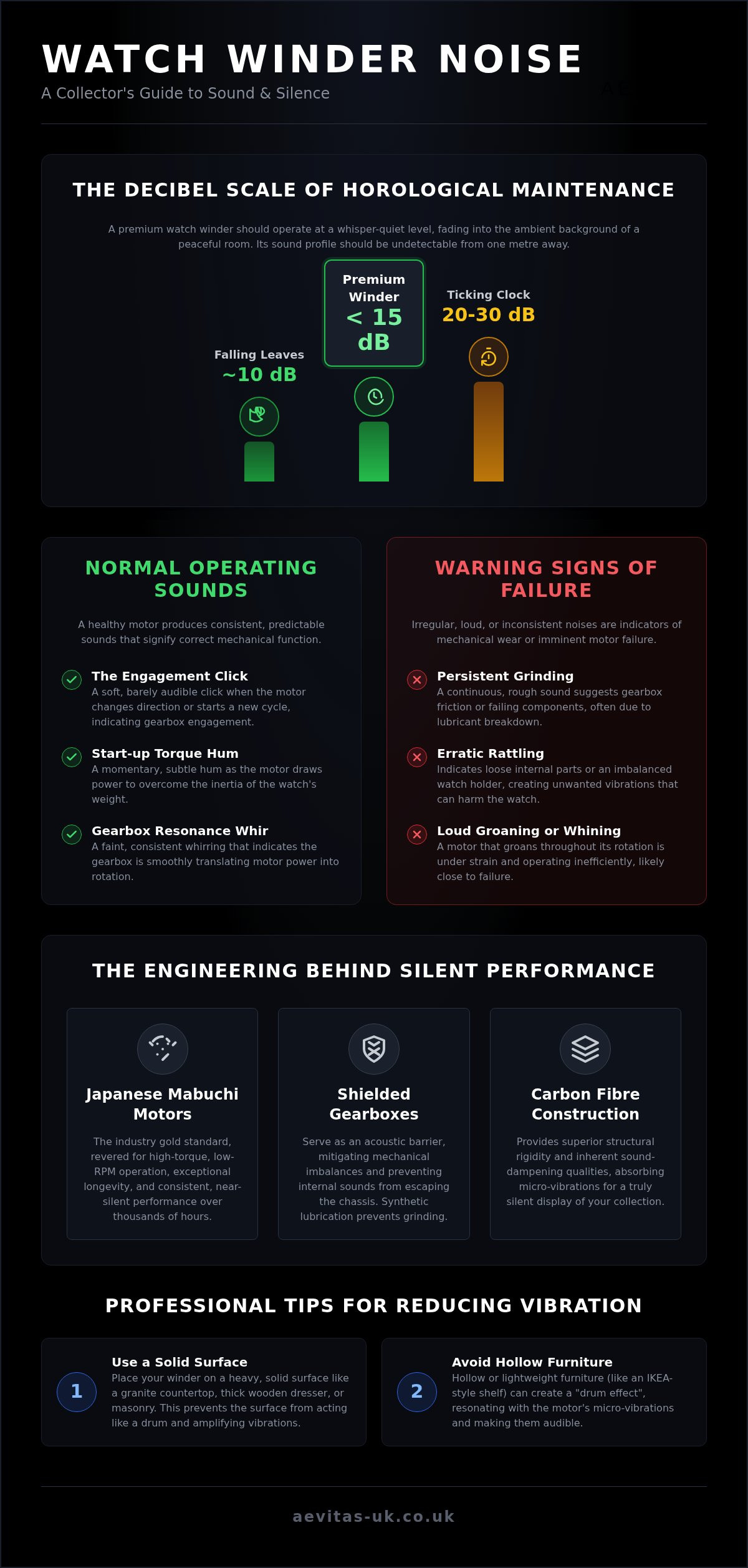
A premium winder should ideally operate at a level below 10-15 decibels. This is significantly quieter than a typical household. For comparison, a ticking clock generally registers between 20 and 30 decibels, whilst the sound of falling leaves sits at approximately 10 decibels. For high-end Japanese motors, silent operation is defined as a sound profile that remains undetectable to the human ear from a distance of one metre. This level of refinement ensures that the winder can reside on a bedside table without disturbing your rest.
Normal Start-Stop and Directional Transition Sounds
The transition between winding cycles often produces specific mechanical signatures. You may notice the following sounds during standard operation:
- The Engagement Click: A soft, barely audible click often occurs when the motor changes rotation direction or begins a new cycle. This signifies the gearbox engaging.
- Start-up Torque: A momentary, subtle hum is normal as the motor draws initial power to overcome the inertia of the watch's weight.
- Gearbox Resonance: A faint whirring indicates the gearbox is successfully translating motor power into rotation.
These occurrences are rooted in fundamental electric motor principles and don't indicate a fault. The distinction lies in the duration. A healthy hum lasts only a second. A failing motor will groan throughout the entire rotation. If you don't hear a steady, rhythmic pulse, it's time to investigate further. Understanding these nuances allows you to maintain confidence in your winder's longevity.
The Engineering Behind Silent Watch Winder Motors
Achieving near-silent performance requires a departure from standard consumer electronics. In the world of high-end horology, silence is a byproduct of efficiency. When researching watch winder motor noise what to expect, discerning collectors look for high-torque, low-RPM configurations. These motors provide the necessary power to rotate heavy timepieces without the high-frequency whine associated with smaller, over-revved alternatives. Precision-milled components in the drive train ensure that every movement is fluid, reducing the energy lost to vibration.
Scientific studies, such as acoustic measurements of small motors, demonstrate that noise is often a result of electromagnetic and mechanical imbalances. Premium winders mitigate these through shielded gearboxes that serve as an acoustic barrier. This shielding prevents internal mechanical sounds from escaping the chassis, maintaining the calm of your living space. By containing the acoustic energy at the source, manufacturers can deliver a product that operates effectively without intruding on your environment.
Why Mabuchi Motors are the Industry Gold Standard
Japanese engineering has long dominated the sector through the world-renowned Mabuchi motor. These units are celebrated for their consistent rotation speeds and exceptional longevity. Unlike the generic, unbranded motors found in entry-level products, Mabuchi components are designed specifically for continuous, low-impact operation. They utilise high-grade brushes and magnets that maintain their integrity over thousands of hours. This reliability ensures that your winder remains as quiet on its fifth anniversary as it was on its first day.
Gearbox Friction and the Role of Synthetic Lubrication
The gearbox is the most frequent source of unwanted mechanical friction. Luxury winders utilise synthetic lubricants that are engineered to remain stable across a wide temperature range. This prevents the "grinding" sound of metal on metal that often plagues cheaper units as their lubricants degrade. Sealed gearbox units further enhance performance by preventing dust ingress, which can act as an abrasive and increase noise over time.
Because these systems are factory-sealed, they rarely require internal maintenance by the owner. It's a hallmark of Aevitas engineering, where the focus is always on protecting the value of your horological investments. By investing in superior drive train technology, you eliminate the anxiety of mechanical failure whilst enjoying a truly silent environment. This technical precision is what separates a professional-grade winder from a standard storage box.
Identifying Warning Signs: When Noise Indicates a Problem
Distinguishing between a healthy mechanical whisper and a symptom of failure is essential for any serious collector. Whilst a premium unit operates almost silently, certain acoustic signatures indicate internal distress. Understanding watch winder motor noise what to expect involves recognising when a rhythmic hum turns into an irregular disturbance. Before concluding that a motor has failed, perform the "One-Minute Test" to isolate the source. Remove your timepiece and run the winder empty for sixty seconds. If the noise persists, the fault lies within the motor or gearbox. If the silence returns, the issue is likely related to how the watch was seated or balanced.
Mechanical faults often present as inconsistent sounds that break the steady rhythm of the winding cycle. Environmental issues, such as the unit being placed on an uneven surface, can also mimic motor trouble. Isolating these factors early prevents unnecessary anxiety and ensures you only seek repairs or replacements when a genuine fault exists. A proactive approach to these sounds protects both your environment and your horological investments.
Grinding, Scraping, and Metallic Shrieking
Grinding, scraping, or a high-pitched metallic shrieking are definitive red flags. These sounds typically signal gearbox depletion, where the synthetic lubricants have dried out or been contaminated by dust. A stalling motor might also emit a sharp electronic whine as it fails to overcome internal resistance. Ignoring these warnings is dangerous for your collection. Excessive mechanical friction creates heat and erratic vibrations that can be transmitted through the rotor directly into your watch movement. This can disrupt the delicate balance of a high-value timepiece, leading to costly service requirements. Should you hear any metallic scraping, disconnect the power immediately.
Intermittent Rattling and Vibration
Intermittent rattling is often an environmental issue rather than a sign of motor burnout. This sound usually indicates a loose internal mount or an unseated watch cushion. Substantial timepieces, particularly solid gold dive watches, can exacerbate slight imbalances in the winding cup. If the watch bracelet isn't tensioned correctly against the cushion, the watch will shift during every rotation, creating a rhythmic knocking sound. This "clunk" is often mistaken for a gear slip but is easily corrected. Ensure the bracelet is snug and the cushion is clicked firmly into its housing. Regular checks of the winder's internal fittings will help maintain a silent environment and prevent wear on the attachment points.
Professional Tips for Reducing Watch Winder Vibration
Vibration management is as critical as motor quality. Even the finest Japanese motor can sound disruptive if placed on an unsuitable surface. When considering watch winder motor noise what to expect, many collectors overlook the "Drum Effect". This occurs when hollow furniture or thin veneers amplify the micro-vibrations of the drive train, turning a nightstand into an accidental acoustic chamber. By selecting a high-mass surface such as solid oak, marble, or stone, you provide the density required to absorb these frequencies rather than broadcasting them.
Beyond the furniture, the internal load affects the acoustic profile. A heavy timepiece, such as a platinum chronograph or a robust gold diver, places greater demand on the motor's torque. If the Turns Per Day (TPD) are set higher than the manufacturer’s recommendation, the motor remains active for longer periods, increasing the likelihood of thermal expansion in the gears and subsequent noise. Matching the TPD specifically to your watch movement ensures the motor rests frequently, maintaining its near-silent performance for the long term.
Surface Selection and Acoustic Isolation
Decoupling the winder from your furniture is a simple yet effective strategy. Discreet rubber or felt pads placed beneath the unit can break the path of vibration. For those seeking the ultimate in acoustic containment, placing your collection inside watch winder safes offers a dual benefit. The thick, reinforced walls and heavy insulation of a safe provide an unparalleled sound barrier whilst securing your high-value assets. This arrangement ensures that even the faintest mechanical whisper is contained within a secure, sound-dampened environment.
Optimising the Watch and Cushion Interface
A rhythmic "clack" during rotation is rarely a motor fault. It is usually the sound of a loose bracelet shifting against the winder’s cup. To achieve a silent rotation, ensure the watch is perfectly centred on its cushion. Use the following checklist:
- Tighten the bracelet or strap so it remains immovable on the cushion.
- Check that the cushion is seated fully into the winding cup until it clicks.
- Ensure the watch face is parallel to the rotation axis to avoid an eccentric load.
If an older unit has developed a permanent mechanical hum that cannot be mitigated, consider transitioning that specific timepiece to luxury watch stands for display purposes. This preserves the aesthetic of your collection without the acoustic distraction. To upgrade your storage to a professional standard, browse our collection of premium watch winders designed for silent operation.
Investing in Silence: The Aevitas Standard
Aevitas represents the pinnacle of silent horological maintenance. For collectors who demand an undisturbed environment, our engineering prioritises acoustic neutrality. When researching watch winder motor noise what to expect, the distinction often lies in the choice of materials and the quality of the drive train. We utilise world-renowned Mabuchi motors throughout our range, ensuring that every rotation is powered by Japanese precision. This commitment to component quality is why we're the best-selling premium watch winder brand, offering a sophisticated solution for the most discerning owners.
Our identity as a British brand is rooted in longevity and heritage. We act as a trusted advisor to collectors, understanding that the value of a Rolex or Patek Philippe extends beyond financial worth. By focusing on modern engineering alongside traditional craftsmanship, we provide the peace of mind that your timepieces are being maintained in an environment of total safety. This heritage-focused sensibility ensures that our products are built to last for years, mirroring the durability of the watches they protect.
The Acoustic Benefits of Carbon Fibre and Premium Materials
Carbon fibre is often prized for its modern aesthetics, yet its acoustic properties are equally significant for sound dampening. Unlike generic plastic housings or thin wood veneers, carbon fibre watch winders offer superior rigidity. This structural integrity prevents the chassis from acting as a resonator for internal motor frequencies. High-density materials absorb micro-vibrations far more effectively than lightweight alternatives. Every Aevitas unit is crafted to be whisper-quiet, a standard achieved through rigorous testing before worldwide delivery. We ensure that the mechanical pulse of the winder remains undetectable, even in the stillness of a bedroom.
Choosing the Right Winder for Your Lifestyle
Selecting the correct storage solution is a critical step in organising a refined home. For those with expanding horological interests, our multi-watch winders provide a centralised, silent solution for numerous timepieces. It's essential to buy from a specialist curator who understands the technical requirements of high-end movements rather than a general retailer. A specialist ensures that the TPD settings and motor quality meet the standards required for luxury horology. We invite you to browse our premium collection to discover the latest in silent technology and elegant design.
Refining Your Horological Environment
Achieving a silent home for your collection requires a balance of precision engineering and proper placement. You now have a clear understanding of watch winder motor noise what to expect, moving from the anxiety of mechanical failure to the confidence of expert care. By utilising high-density materials and isolating your unit from resonant surfaces, you ensure that your winder remains a functional asset rather than an acoustic distraction.
Protecting your timepieces shouldn't compromise your peace of mind. As the best-selling premium brand, we specialise in equipment that operates with quiet authority. Every unit is equipped with Japanese Mabuchi motors and backed by free insured worldwide delivery. It's time to transition from disorder to refinement with a solution designed for longevity and total discretion.
Upgrade to a Whisper-Quiet Aevitas Watch Winder today and experience the calm of professional-grade storage. Your collection deserves nothing less than total precision.
Frequently Asked Questions
Is it normal to hear my watch winder at night?
A premium winder should be nearly undetectable in a quiet room. Most luxury units operate below 15 decibels, which is quieter than a soft whisper. You might notice a faint, rhythmic pulse if the device is situated directly on your bedside table. If the sound is intrusive enough to disturb your rest, it's likely a sign of a lower-quality motor or an unsealed gearbox.
Why has my watch winder motor suddenly become louder?
Sudden noise increases usually indicate internal wear or environmental changes. Gearbox friction often develops when factory lubricants degrade or dust enters the mechanism. It's also possible the unit has shifted onto a hollow surface that amplifies micro-vibrations. When considering watch winder motor noise what to expect, a transition from a steady hum to a grinding sound is a clear signal that the internal components require attention.
Can a noisy watch winder damage my automatic watch?
Yes, excessive noise often stems from mechanical failure that generates unwanted heat and vibration. These erratic frequencies can be transmitted through the watch cushion directly into the movement's delicate hairspring and rotor. A stalling motor may also cause inconsistent rotation speeds, which disrupts the winding accuracy of a luxury timepiece. We recommend stopping any unit that emits a metallic shrieking or heavy knocking sound immediately.
How long do watch winder motors typically last before they get noisy?
High-quality Japanese Mabuchi motors are engineered for longevity and should remain whisper-quiet for over five years of continuous use. The lifespan depends heavily on your Turns Per Day settings and the weight of your timepieces. Cheaper, unbranded motors found in entry-level products often develop audible strain within 12 to 18 months. Investing in a specialist brand ensures your motor maintains its acoustic integrity for the long term.
What is the quietest type of watch winder motor?
Japanese Mabuchi motors are the industry gold standard for silent, reliable performance. These units are designed to deliver high torque at low revolutions per minute, which eliminates the high-pitched whine associated with standard electric motors. Aevitas utilises these precision components across our range to ensure a near-silent experience. When paired with a shielded gearbox, these motors provide the most refined acoustic profile available to collectors today.
Does the weight of my watch affect the noise the winder makes?
Heavier timepieces, such as solid gold divers or complex chronographs, place a higher load on the drive train. This extra weight can amplify existing vibrations if the watch isn't perfectly centred on its cushion. Whilst a quality motor handles this weight easily, an unbalanced load can cause a rhythmic "clunk" during rotation. Always ensure your watch is snug on the cushion to distribute the weight evenly and minimise noise.
Can I repair a noisy watch winder motor myself?
We don't recommend attempting DIY repairs on luxury winding units. These devices feature complex gearboxes and factory-sealed motors that require specialised technical knowledge to service correctly. Opening the chassis can introduce dust into the sensitive electronics and will void your manufacturer's warranty. Aevitas focuses on providing high-quality, durable replacements and new storage solutions rather than repair services, ensuring your collection always has a reliable home.
Where is the best place to put a watch winder to minimise noise?
Position your winder on a high-mass, solid surface such as a stone countertop or a solid wood desk. Avoid placing the unit on hollow nightstands or thin veneers, as these act like a drum and amplify internal sounds. For those who require absolute silence, housing your collection within watch winder safes provides an exceptional acoustic barrier. The reinforced walls and heavy insulation effectively contain any micro-vibrations within the safe's interior.