

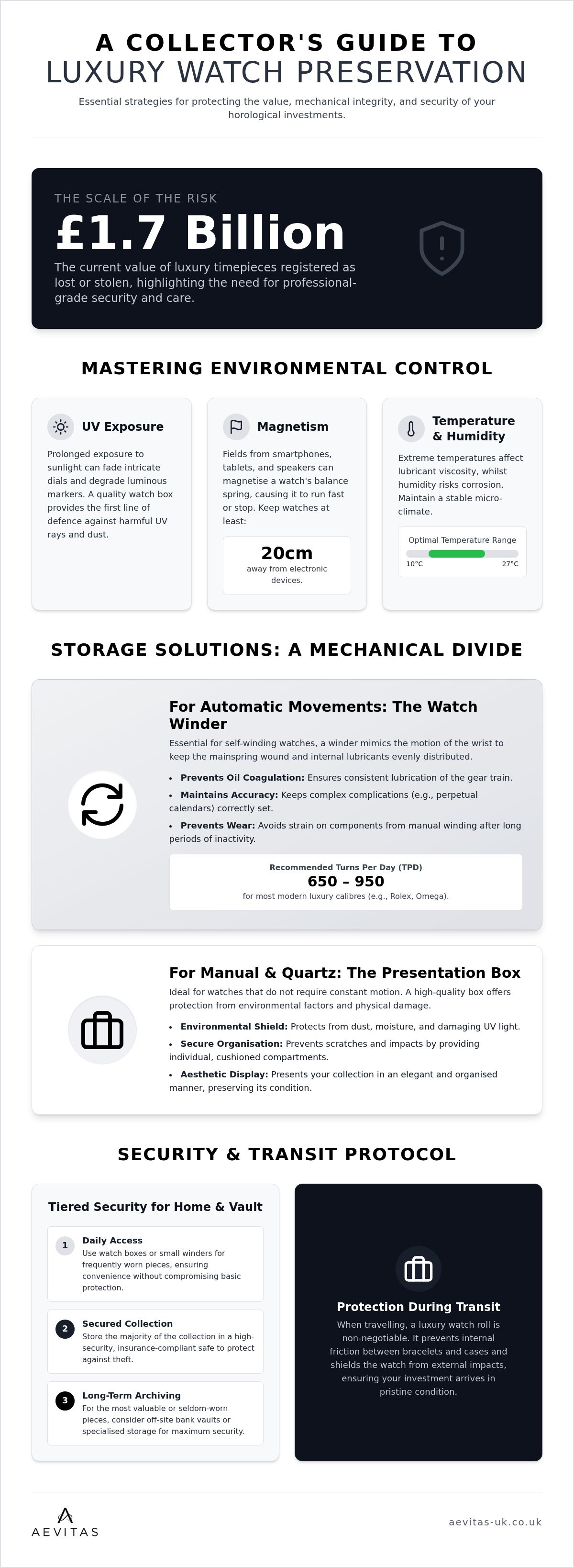
With over £1.7 billion worth of luxury timepieces currently registered as lost or stolen, your collection represents a significant financial asset that requires more than casual oversight. You likely recognise that a fine watch is a masterpiece of precision engineering, yet the anxiety of mechanical seizing or the threat of theft remains a constant concern for many serious collectors. Finding the best way to store luxury watches is not merely about organisation; it's about establishing a professional standard of care that preserves both aesthetic beauty and long-term market value.
This guide provides the definitive framework for protecting your horological investments against environmental damage and security risks. You'll discover how to implement a tiered storage routine that balances daily convenience with the rigorous requirements of insurance compliance. We also clarify the necessity of watch winders and identify which accessories are truly essential for maintaining a pristine collection. From high-security safes to leather travel rolls, you'll gain the knowledge needed to ensure your timepieces remain in peak condition. This is the transition from simple ownership to sophisticated curation.
Key Takeaways
- Maintain the mechanical integrity of your collection by mastering environmental controls and shielding movements from magnetic interference.
- Identify why an automated winder is the best way to store luxury watches with self-winding movements to ensure they remain lubricated and ready for wear.
- Establish a tiered security protocol that satisfies UK insurance mandates without compromising the accessibility of your favourite pieces.
- Protect your investment during transit by utilising luxury watch rolls that prevent internal friction and external impact damage.
- Learn to select storage solutions that are technically compatible with the specific requirements of premier brands like Rolex, Omega, and Patek Philippe.
The Fundamentals of Horological Preservation: Environmental Control
Preserving a luxury timepiece requires meticulous management of its immediate atmosphere. The best way to store luxury watches involves creating a stable "micro-climate" that shields delicate internal components from external stressors. UV exposure remains a silent threat to your investment. Prolonged sunlight can fade intricate dials and degrade luminous markers over time, reducing the piece's aesthetic and financial value. A professional watch presentation box provides the first line of defence by blocking harmful light whilst maintaining a dust-free environment.
Combatting Magnetism in the Modern Home
Magnetism is a pervasive yet often overlooked danger to mechanical accuracy. Modern homes are filled with invisible magnetic fields generated by tablets, smartphones, and high-powered speakers. When a balance spring becomes magnetised, the coils stick together, causing the watch to run significantly fast or stop entirely. To test for this, place a traditional compass near your watch. If the needle deflects as the watch passes, the movement is likely affected. You should keep your storage cases at least 20cm away from electronic devices to ensure the hairspring remains neutral and precise.
Humidity and Temperature Stability
Mechanical movements rely on specialised synthetic oils to reduce friction between moving parts. These lubricants are sensitive to extreme fluctuations. The optimal temperature for long-term storage sits between 10°C and 27°C. If a watch is stored in a cold environment, such as an unheated room or a damp wardrobe, the oils can coagulate. Conversely, excessive heat can cause lubricants to thin and migrate away from critical pivot points. This leads to increased wear during operation.
Humidity poses an even greater risk to your collection. High moisture levels can lead to dial oxidation and internal corrosion, even in professional-grade dive watches. You should avoid storing collections in bathrooms or near radiators where moisture levels spike. For those using a safe or a large storage chest, including silica gel packs is a practical step to manage ambient moisture. Understanding the specific needs of different types of watches is vital. Vintage pieces often lack the robust gaskets found in modern iterations, making them far more susceptible to environmental decay. Maintaining a dry, temperate environment is the best way to store luxury watches and guarantee their longevity for the next generation.
Selecting Storage for Mechanical Health: Boxes vs. Winders
The best way to store luxury watches depends entirely on the specific movement housed within the case. Whilst quartz and manual-wind pieces are perfectly suited to the static environment of a watch presentation box, automatic calibres require a more dynamic approach to maintain their mechanical health. Static storage for extended periods can lead to the settling of synthetic lubricants, which may eventually cause internal components to "seize" or gaskets to lose their elasticity.
A watch winder serves as a surrogate for the human wrist. By keeping the movement in motion, you ensure that oils remain evenly distributed across the gear train. This is a core part of the fundamentals of watch preservation. However, not all winders are equal. You must match the rotation settings to your watch’s calibre, specifically focusing on Turns Per Day (TPD). Most modern luxury watches require between 650 and 950 TPD to remain fully wound. Using a programmable winder prevents the slipping clutch mechanism from being overworked, which is the best way to store luxury watches with automatic movements over the long term.
When to Use a Watch Winder
If your collection includes complex complications such as perpetual calendars or moon phases, a winder becomes an essential tool. Resetting these intricate displays is often a meticulous process; keeping them active ensures they are always accurate and ready for immediate wear. Beyond convenience, the mechanical motion maintains the viscosity of the lubricants, preventing the need for premature servicing. For collectors requiring specific directional settings, Aevitas UK watch winders offer the programmable precision needed for brands like Rolex, Patek Philippe, and Omega.
The Anatomy of a Quality Watch Box
For watches that don't require constant motion, a superior storage box is the standard choice. A well-engineered box is not just a container but a protective environment. Consider these three critical features:
- Cushion Tension: Pillows must be soft enough to accommodate different bracelet sizes without stretching the links or placing stress on the spring bars.
- Lid Clearance: There should be ample vertical space to ensure the crystal never makes contact with the lid, preventing micro-scratches.
- Individual Compartments: Wide dividers are necessary to ensure that oversized crowns or pushers do not clash with adjacent timepieces.
Choosing a box with a soft velvet or leather lining will further protect polished surfaces from abrasions. If you are looking to organise your manual pieces with the same level of care, our premium watch winders often include integrated storage drawers for a complete collection solution.
Tiered Security: Balancing Accessibility with Protection
Securing a collection requires a strategic division between accessibility and absolute protection. The best way to store luxury watches is through a tiered approach, where you separate your daily rotation from long-term investment pieces. Whilst a display box on a dressing table offers convenience for your frequent wearers, high-value assets demand a more robust solution. This strategy ensures that your most prized horological assets are shielded from theft and environmental hazards without hindering your daily routine.
Standard home safes often fail to meet the rigorous standards set by UK insurers. Most basic models lack the necessary "Cash Rating" required to cover high-value jewellery and watches. If your collection's total value exceeds the safe's certified limit, your policy may be void in the event of a claim. Integrating security with mechanical maintenance is possible through a watch winder safe. These units provide the steel-plated protection of a vault whilst keeping your automatic movements perfectly wound and ready for use.
Insurance-Approved Watch Safes
When selecting a safe, you must understand the cash rating system used by British insurers. A safe rated for £10,000 cash typically provides cover for up to £100,000 in valuables, such as watches. You should always verify these limits with your provider before installation. For a deeper dive into technical specifications, read our guide on The Ultimate Watch Safe for Collectors. Fire protection is equally vital. Intense heat can warp delicate hairsprings and destroy gaskets long before flames ever touch the movement. A fire-rated safe offers a critical buffer against such catastrophic loss.
Displaying Your Collection Safely
For the timepiece currently in your rotation, a luxury watch stand provides a refined alternative to leaving a watch on a hard surface. These stands prevent the bracelet and clasp from scratching against the case back whilst keeping the watch visible. There is a clear psychological benefit to an organised collection, as it reflects the care and precision inherent in horology itself. However, you should never position these stands in direct sight of ground-floor windows. Discreet placement within a bedroom or dressing room maintains the aesthetic appeal of your collection whilst reducing the risk of targeted theft. The best way to store luxury watches is to keep them out of sight from passers-by whilst ensuring they remain an elegant part of your interior environment.
Best Practices for Travel and Long-Term Archiving
Transporting a high-value collection requires a shift in mindset from static security to impact resistance. The best way to store luxury watches whilst in transit is to eliminate any possibility of internal movement. Storing a timepiece loosely in a suitcase or using a generic hotel safe exposes the crystal and case to abrasive contact. Professional travellers avoid original manufacturer boxes because their bulk attracts unwanted attention and offers limited protection against the high-frequency vibrations of modern travel.
The Art of the Watch Roll
A dedicated luxury watch roll provides a compact, secure solution for the mobile collector. These cases utilise internal dividers to ensure that multiple watches never make contact, preventing "clashing" that leads to unsightly scratches. When selecting a roll, prioritise "M-shaped" cushions. These are specifically engineered to maintain the natural curve of the bracelet, which prevents the pins and links from stretching over time. Whether you require a single or triple roll, the objective is to keep the watch snugly seated against a soft, non-abrasive lining that absorbs external shocks.
Long-Term Storage and Documentation
If you are archiving a timepiece for several months, mechanical health remains the priority. You should never store a watch in a sealed plastic bag; this traps moisture and can lead to internal corrosion or dial spotting. Instead, use a breathable presentation case or a secure safe. For quartz watches, it is advisable to have a professional remove the battery to prevent potential acid leakage that can destroy a movement. For mechanical pieces, a "health check" every three months is essential. Simply wind the watch and let it run through its power reserve to keep the lubricants fluid and prevent coagulation.
Documentation is the final pillar of professional archiving. Consider these essential steps for maintaining your collection's provenance:
- Separate Documentation: Store warranty cards and original boxes in a different secure location from the watches themselves to mitigate total loss during a single event.
- Digital Inventory: Maintain a cloud-based log with high-resolution photographs, serial numbers, and purchase receipts for insurance and service tracking.
- Regular Inspections: Ensure the storage environment remains dry and free from the temperature fluctuations often found in attics or basements.
Maintaining the "full set" is vital for preserving the resale value of your investment. To find the perfect protective companion for your next journey, explore our professional range of Luxury Watch Roll Travel Cases today.
Creating a Bespoke Storage System with Aevitas UK
Establishing a professional storage system is the final step in the evolution of a serious collector. The best way to store luxury watches is to treat the storage environment with the same reverence as the movement itself. Aevitas UK operates at this intersection of British design and technical precision. We understand that a Rolex Submariner and a Patek Philippe Perpetual Calendar have vastly different requirements. Our philosophy centres on providing bespoke solutions that cater to these specific horological needs whilst maintaining a cohesive, luxury aesthetic in your home.
Why Material Choice Matters
Material science plays a pivotal role in long-term preservation. High-performance carbon fibre watch winders are favoured by modern collectors for their exceptional durability and inherent anti-magnetic properties. Unlike cheaper alternatives, carbon fibre provides a rigid, stable housing that shields the movement from external interference. Inside our cases, we utilise only premium leather and non-reactive velvet linings. These surfaces ensure that no chemical reactions occur with your watch's metal components or delicate leather straps. A cohesive display is not just about organisation; it is about ensuring every surface that touches your timepiece is engineered for protection.
Starting Your Storage Journey
Building a storage system for a growing collection requires foresight. If you are managing a multi-watch configuration, consulting with experts ensures that your TPD settings and security tiers are correctly aligned. You should stay informed on the latest Watch Winder Safe Home Security Trends to ensure your setup remains insurance-compliant as regulations evolve. The best way to store luxury watches is to adopt a proactive approach to maintenance and security today, rather than reacting to a mechanical failure or security breach later.
To conclude your setup, follow this final checklist for a professional home storage environment:
- Environmental Control: Keep your collection in a room with stable temperatures and low humidity.
- Mechanical Health: Use programmable winders for automatics to keep lubricants fluid.
- Security Compliance: Verify that your safe's cash rating covers the total value of your assets.
- Provenance: Store original boxes and papers in a separate, fire-rated location.
- Travel Readiness: Keep a high-quality watch roll prepared for secure transit.
Your collection represents both a passion and a significant financial investment. Secure your legacy by exploring the full Aevitas UK collection today.
Securing Your Horological Legacy
Aevitas UK provides the technical foundation for this professional standard. As the UK’s best-selling premium watch winder brand, our solutions are compatible with all major luxury watch brands. We offer a range of carbon fibre winders and high-security safes designed to meet the technical demands of 2026. With free insured delivery worldwide, you can upgrade your setup with complete confidence in our British-designed craftsmanship.
Secure your collection with Aevitas UK’s premium storage solutions and take the first step towards refined organisation. Investing in high-performance storage is the most effective way to preserve the heritage and financial value of your collection for the next generation. Your timepieces deserve nothing less than absolute protection.
Frequently Asked Questions
Is it better to store a watch face up or on its side?
Face up is the professional standard for long-term storage. This position ensures that lubricants remain evenly distributed across the pivots and reduces lateral pressure on the balance staff. Whilst some collectors use side storage to regulate timekeeping, the best way to store luxury watches for preservation is within a horizontal presentation box. This prevents unnecessary stress on the crown and ensures the movement remains stable during periods of inactivity.
Do watch winders damage the movement over time?
High-quality winders do not damage movements when configured correctly. Modern automatic watches include a slipping clutch to prevent over-winding, and programmable winders allow you to set specific Turns Per Day (TPD) for your calibre. This motion keeps internal oils from settling or coagulating. Using a winder is a safe, effective method to ensure your timepiece remains accurate and ready for wear without risking mechanical fatigue.
Can I store my luxury watch in its original box indefinitely?
Original boxes are best kept for provenance rather than daily storage. Many manufacturer boxes utilise materials that can degrade or outgas over time, potentially affecting the watch's dial or metal finish. These boxes often lack the specialised environmental protection found in professional storage cases. For long-term preservation, a dedicated watch box with non-reactive linings provides a superior micro-climate for your investment whilst keeping your collection organised and accessible.
How often should I wind a watch that I don’t wear regularly?
You should wind a manual timepiece at least once every three months. This periodic movement ensures that internal lubricants remain fluid and functional. For automatic watches, the best way to store luxury watches is on a programmable winder that simulates regular wear. This prevents the movement from sitting static for years, which can lead to the hardening of oils and an eventual loss of chronometric precision.
What is the best way to store a luxury watch whilst travelling?
A luxury watch roll is the superior choice for travel. Unlike bulky original boxes, a roll is discreet and designed to absorb shocks whilst preventing internal friction. Ensure your roll has individual compartments so that the watches don't clash together. This professional approach protects the crystal and case from scratches, ensuring your timepieces remain in pristine condition during transit or when placed in a hotel safe.
How do I know if my watch safe is insurance-approved?
You can identify an insurance-approved safe by its EuroGrade rating and certified cash cover limit. In the UK, insurers typically provide cover for valuables at ten times the safe's cash rating. For example, a Grade 0 safe with a £6,000 cash rating usually covers jewellery and watches up to £60,000. Always consult your insurance broker to confirm that your specific model meets their 2026 security standards for high-value collections.
Should I store my watch documentation with the timepiece?
Documentation should always be stored separately from the timepieces. Keeping original papers and warranty cards in a different secure location protects your collection's provenance in the event of theft or fire. If the watches are stolen, having the paperwork elsewhere simplifies the insurance claim and prevents the thief from selling a "full set." Maintaining a digital inventory with serial numbers is also a vital step for professional collectors.
Does magnetism really affect modern luxury watches?
Magnetism is a genuine threat to mechanical accuracy in the modern home. Invisible fields from smartphones, tablets, and speakers can cause the hairspring to stick, leading the watch to run significantly fast. Even modern watches with anti-magnetic components can be affected by high-powered electronics. You should keep your storage solutions at least 20cm away from devices to ensure the movement remains unaffected by these invisible magnetic forces.
0 comments